Friday, August 2, 2013

Sicilian wines: from the pleasure to the healthy properties

0 comments
 
What do you know about Sicilian wine? Would you like to discover more? Eve Pierce has written a brilliant new piece for the Sicilian Cuisine Blog about our wines and their superb properties. So if you are a wine lover, or just a curious person, don't miss it! Here she is in her own words: 

"Sicilian wines are having a boom right now so it’s a good time to start sampling the wonderful range on offer not only for pleasure but also for health reasons. According to a new book by Robert V. Camuto the number of commercial wine producers in Sicily has grown from around 60 to nearly 300 since 1990. Palmento: A Sicilian Wine Odyssey (University of Nebraska Press, 2010) attributes the boom in boutique style quality wine production to the rediscovery and appreciation of the unique “terroirs” of Sicilian wine.

There are more vineyards and grapes grown in Sicily than in any other region in Italy. Sicilian vineyards have been producing wine since at least 750 BC. The island’s main wine production focused in recent history on their famous fortified Marsala and cheap blends of wine as a major export. Nowadays their wines are winning awards and turning heads across the world.

What’s making some of the Sicilian wines even more special is the impressive number of biodynamic and organic wines being produced. It is made easier by the amazing farming conditions on the island where around 300 days of plentiful sunshine beams on vineyards and the 90 plus day harvest is one of the longest in the world. Frank Cornelissen who ages his natural wines in clay amphorae on Mount Etna says that “Thanks to our climate, Sicily is ‘organic’ by definition”.


Most wine drinkers will be also pleased to hear that Sicilian wines in particular are providing positive health benefits. The effects of a Mediterranean diet with a little red wine thrown in are widely believed to be beneficial but researchers at the Institute of Clinical Medicine at the University of Palermo in Italy have found some interesting results when testing Sicilian red wines in particular. 
Some Sicilian reds had a positive effect on many risk factors of atherosclerosis, or hardening of the arteries. The University of Palermo has also been involved in a study into why cancer incidence rates in Sicily are 20 per cent lower than the rest of Italy and 33 per cent lower than the USA. The results of the study are found on an Italian cancer website and the significantly reduced cancer rates are being attributed to a substance found only in Sicilian wines called Picetannolo which is commonly used in cancer medicines and treatments. There is a school of thought that also insists washing your hair in wine will reduce hair loss, not to mention make your hair glossier. Red wine is supposed to be more effective than white wine. Whether Sicilian wines will make your hair thicker and shinier we will leave up to you to find out. In the meantime we suggest you taste some of the fabulous Sicilian wines before it potentially goes to waste in the bath.


There is a huge choice of Sicilian wines to choose from. By far the most well known red grape is Nero d’Avola offering flavours ranging from jammy to full and spicy, sometimes blended with the fruity raspberry sweet grape Frappato also lovely on its own. The pinot noir like Nerello mascalese is one of the most appealing reds produced in Etna and Carricante is leading the charge for the whites from the region with a robust flavour.

Whether you choose to sample Sicilian wines for pure and simple pleasure or you want to discover the health benefits for yourself, you certainly won’t be disappointed by the great range and unique local wines of this amazing region."


Thanks again to Eve for her very interesting post. If you want to check also the healthy properties of the Mediterranean Cuisine click
here.

Tuesday, July 16, 2013

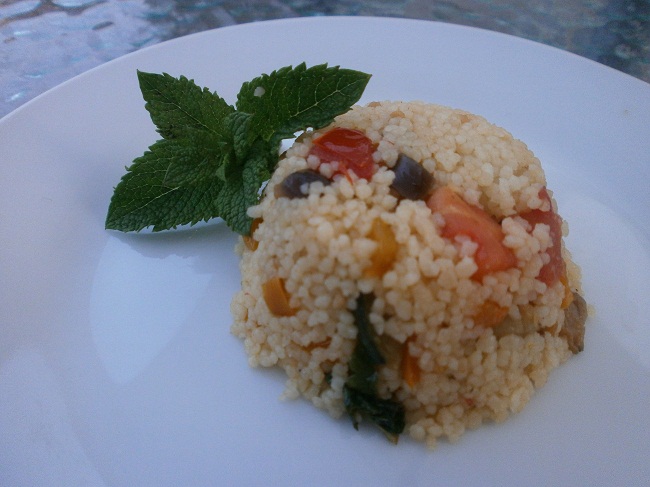
Colors and flavors, it's the cous cous contamination!

0 comments

How do you like some contaminations of cultures, colors and flavors? In the Sicilian cuisine this is possible thanks to a unique dish that is called cous cous! Healthy, colorful, light and fresh, it is perfect for the summer time! 

If we want to match this recipe with a fashion accessory, the perfect one would be the colorful and trendy necklace of this summer. Check it out on Francesca's fashioncooking amazing article. She knows how to combine the two!

A drop of history: As you may already know the cous cous was introduced in Sicily by the North-Africans which still prepare it with mutton meat and cooked vegetables (carrots, onions, peas) so is  definitely more of a winter dish!

In Sicily the most famous cous cous goes with the fish soup. You find it in the western part of the island: Trapani, San Vito, Erice. By contrast in Palermo we have a different version, perfect for veggies we usually cook it with tomatoes, bell peppers, mushroom, aubergine/eggplant, cougette/zucchini and some fresh scented mint. At least this is the recipe I love making, but if you are inspired by other ingredients, you can add them as you like. Once I put olives, rocket salads and mozzarella cheese as well, but this plain version is the one I love the most.

Ingredients & preparation for 6:

400 gr. cous cous
1 cougette/zucchini
1 aubergine/eggplant
1 big bell pepper orange or yellow (or you can use half orange and half yellow)
3 tomatoes
5 medium sized field mushrooms 
a bunch of fresh mint
olive oil
salt

This recipe takes about 2 hours (plus one hour in the fridge). You start with washing your vegs under running water, than cut them in pieces as small as possible. Put the tomatoes aside on a different plate. Once you have all your ingredients in pieces, on a frying pan put a drizzle of olive oil on a medium heat and sauteè all the vegetables except the tomatoes. Stir them from time to time until they become well cooked and golden brown. When they are ready turn the heat off. Wash and chop the mint and add it in the pan together with the tomatoes and then place the mix in a large bowl.

In the same frying pan prepare the cous cous by following the instructions (usually add some water and salt and let cook it for 10 minutes).
Once the cous cous is ready, stir it with a fork to separate the little grains. Let it cool down and finally add it to the veggies in the bowl. Keep mixing all together for about 5 minutes to reach
the "perfect contamination" and put the bowl in the fridge for at least one hour. Serve fresh but not cold.

This dish is so good we even have a Festival to celebrate it every September!
Personally I love it, during summer, because it is perfect for every occasion: for a lunch when you come back from seaside, for a picnic at the park or for a buffet party on the day of your birthday.  


It's fresh and light, easy to make and all these colors will just cheer you up. Enjoy!

THANKS TO ROBERTA FORTE FOR BEING MY MODEL FOR ONE NIGHT ;-)


Monday, July 1, 2013

The Sicilian Cuisine Blog and my first official interview for 'Italian reflections'

0 comments

Very proud and very grateful to Adrian Petersen for publishing the very first interview since my blog, Sicilian Cuisine, was born on January 2011.


When I first started it some people told me it wasn't going to be successful because of the "language barrier". "In English? Italians are not going to understand it!" - they used to tell me.

Well... today after 2 years and a half and after these little huge things that I have accomplished all by myself I have to say I was totally right and I am looking forward to having more and more to come !!!!!

THANK YOU :-)


Thursday, June 20, 2013

FashionCooking, the new blog about food and trends

0 comments

FashionCooking is a new blog on the web! Why am I talking about it in my own blog? Because I find it original and unique. Infact its creator, the beautiful Sicilian Francesca Landolina, is keen on both fashion and food, so she came up with this brilliant idea, combining the two passions in just one piece of work, which is exactly what I did with mine, putting together my love for food, writing and English language.

Visiting her blog
you can get inspiration for a particular dress or recipe, and you can find all the latest trends. Isn't it great? I wish her the best of luck with this new adventure! :-)

In the picture above Francesca with Chef Natale Giunta at his restaurant in Palermo.

Thursday, June 13, 2013

'a Nivarata, the new Festival of Sicilian granita

0 comments


Are you crazy about Sicilian granita? Are you any close to the town of Acireale in the province of Catania? 


Well... if the answer to those questions is YES than don't waste any time and go directly there because from today until the 16th of june is taking place the second edition of the brand new Festival of Sicilian granita called in dialect "a nivarata" a word that means a snow fall, because of the consistency of the granita (shaved ice) which is similar to snow and which was initially, in ancient times, made with snow.

There you can see Sicilian experts preparing marvellous granite and you can taste the new flavors as well as the traditional ones: lemon, almonds, pistaches, basil, cinnamon, orange, mint, anisette and a lot more!!!


Here you can find a nice blog on Sicilian granita in Italian language :)

Tuesday, June 4, 2013

Bruce Springsteen, Nicola Fiasconaro and a Fender

0 comments


The one and only "Boss" of rock music, Bruce Springsteen, who is now in Italy for its live tour, yesterday met the famous Sicilian Maestro Pasticcere Nicola Fiasconaro, whose business of the same name is located in Castelbuono, a small town in the province of Palermo.

Fiasconaro is the most renowned brand in Sicily especially for Christmas panettoni but they also produce traditional desserts and chocolate manufacturing. And in fact last monday on the occasion of the concert in Milan Fiasconaro prepared an amazing gift for Bruce Springsteen, the perfect copy of the Fender guitar that the singer always uses to play at his concerts, with the difference that this one was made of Igp chocolate from Modica, a real delicacy and it was all hand-decorated.

"Oh my God" said an astonished and almost speechless Springsteen while thanking Maestro Fiasconaro for such an original present at the end of the concert.
 

Now... what do you think? Will he give a bite to that fender or not? :-)))

Sunday, May 5, 2013

Embrace the Healthy Cuisine of Sicily on a Mediterranean Cruise

0 comments
 
Eve Pierce is our guest blogger for today. She has written this amazing piece, just for us, on the Mediterranean diet and its healthy properties, focusing on Sicilian Cuisine. So here she is in her own words:

"The Mediterranean diet has been recognised as one of the healthiest ways of eating,
both within Europe and beyond, as its consumption is linked with longevity and a reduced risk of heart disease. It is based on the traditional dietary practices of Southern Italy, Spain and Greece, which is rich in plant-based foods, fish and olive oil, with modest intakes of dairy produce and wine, and comparatively little meat. In many ways the diet of Sicily is true to what is considered to be a Mediterranean pattern of eating. One difference is that Sicilians eat more meat than other parts of Southern Italy. This reflects the preference for meat of the Normans and Germans who came here in the middle ages; however, the use of fish is abundant in dishes and still commonly eaten. Fish is just as rich in protein as meat, yet white fish such as sea bream and sea bass, as well as the likes of cuttlefish and sea urchin, are low in fat, whilst oily fish like tuna, swordfish, sardines and anchovies are rich in omega-3 fatty acids. 

These essential fatty acids have long been known to protect the heart and circulation, but they are now known to be important for brain function, so may help to keep our mood balanced and to ward off cognitive decline. Make the most of the opportunity to eat fish whilst cruising in the Mediterranean and visiting Sicily, sampling varieties that you wouldn’t usually at home.

Like other parts of the Mediterranean, pulses (peas, beans and lentils) feature heavily in dishes and Sicily is second only to Tuscany for using them so widely. Fava beans and chickpeas are particularly popular and the former are often spiced and served as a bar snack; it often takes a while for tourists to twig what they are actually eating when they sit down with their beer or glass of wine. Fava beans are also frequently used in soups and are the principal ingredient of a vegetable side dish known as frittedda. Pulses are a good source of plant protein and iron; they are also full of fibre, so not only are they filling, helping with weight control, but they can also help to lower cholesterol. Other vegetables also feature highly in Sicilian cooking and although native varieties such as broccoli, fennel and peppers are popular, those introduced by settlers such as artichokes, tomatoes and eggplants have also become prominent in dishes. When eating out in restaurants, tomatoes and broccoli are often found in pasta recipes, fennel will be served in salads or baked as a side dish, artichokes find their way into frittatas, eggplants will be stuffed with other ingredients and a range of vegetables are combined to make ratatouille.

All vegetables and fruits are rich in antioxidants; these help to control levels of damaging substances in the body called free radicals, which alter cells and lead to the development of heart disease and cancer. Onions and garlic which are used frequently as a flavouring in Sicilian cooking, contains allicin which is thought to confer many of their benefits towards heart, cancer prevention and supporting the immune system. 

As would be expected in the Mediterranean region, olive oil is the predominant oil used in Sicilian cooking and dressings. This oil is rich in monounsaturated fat, which is the type of fat most beneficial to cholesterol, as it lowers harmful LDL cholesterol whilst maintaining levels of protective HDL cholesterol. The nuts introduced from the Middle East – notably almonds, pistachios and pine nuts – contribute further beneficial fats to the diet. They are used to make pesto and in a range of sweet dishes, though are just as enjoyable as a snack with dried fruit such as apricots, figs and currants; pick up some nuts from a Sicilian market to enjoy when back on board.


A trip to Sicily wouldn’t be complete without sampling their wine; even if you just stop off for the day as part of a cruise itinerary, don’t pass up the opportunity to try it. The soil on the island is ideal for growing grapes and wine has been produced here since the Greeks came to Sicily. Try the Sicilian red wine on your holiday; good examples include Nero D’Avola, one of the oldest grape varieties offered by the island. A moderate intake of red wine a day appears to be protective towards the heart. Antioxidants found in red wine is thought to protect the blood vessels and reduce the risk of a blood clot developing.

However long you are in Mediterranean for, embrace its traditional cuisine and look out for those dishes particular to Sicily. Not only will your taste buds thank you, but so will your health, particularly if you can adopt some of their beneficial dietary practices when you return home. The island of Sicily features as a destination on numerous cruise itineraries, providing you the chance to step on to the island’s soil to see for yourself what culinary delights are on offer. Anyone looking to eat well on holiday, in terms of the taste, quality and healthfulness of their food, would find it difficult to fault what Sicily can provide. Here we look at the cuisine of Sicily and the highly nutritious traditional ingredients that are widely used in the island’s cooking, which you can enjoy on board and in Sicily’s restaurants."

Thanks a lot to Eve for this incredible and useful article.


Pic frittedda: http://c1295762.cdn.cloudfiles.rackspacecloud.com/cwright-fava2.JPG
Pic mackerel: http://it.123rf.com/photo_12679982_sgombri-freschi-di-pesce-scrombrus-scomber-su-ghiaccio.html
 
ban nha mat pho ha noi bán nhà mặt phố hà nội