Showing posts with label sicilian pasta. Show all posts

Monday, May 28, 2012

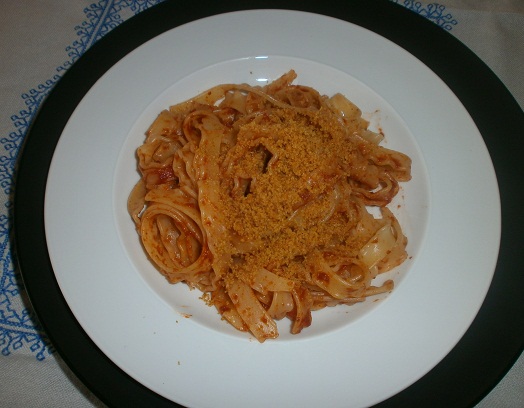
'Pasta con l'anciova', breadcrumb is the secret!

0 comments

Do you know how to make one of our most renowned plate of pasta? It's what we call "pasta cu l'anciova" which means pasta with anchovy, plus tomato puree as the main ingredients. When you will prepare it you will smell the parfum of Sicily!!!

Ingredients & preparation for 4 people:
400 gr - pasta (better if Margherite) - 150 gr tomato puree or extract - 1 clove of garlic - 5-6 anchovies - 6 spoons of breadcrumb - extra virgin olive oil - *Perfect for vegeterians as well!

First of all, you probably know already that we have tons of different shapes of pasta. For this specific one we don't use normal spaghetti, but the so-called "Margherite" which are long, thick, half straight and half curly. They are cute and funny!

So, let's start with putting on the pot for the pasta as usual. For preparing the sauce, take a sauce pan, put it on a medium heat with a drizzle of oil of olive and a clove of garlic. After a minute put the anchovies and with a a wooden scoop or a spatula cut them into tiny pieces until they are completely melted. Now it's time to add the tomato puree, which is usually quite dense and thick. Use the same wooden tool.
In the meantime if the water is boiling, salt it and drop the pasta in (if you don't find the margherite just use spaghetti or penne). With a dipper pour some water pasta in the sauce to help the puree melt easier and quicker. You will see that it will look like a proper sauce in few moments.

The amount of water that you had depends on the rest of the ingredients, especially the tomato extract so be careful in balancing because we don't want the sauce neither too dense (remember that we have to add the breadcrumb) nor too watery.
Once the sauce is done put a frying pan on a high heat with 5 or 6 spoons of breadcrumbs, add some olive oil and start mixing the two with a spoon, stirring continuously as we don't want to burn the breadcrumb on a side.

This is very important because it will substitute the usual grated cheese that we normally put on pasta dishes. Little bit of story: The origin is obviously a poor one, infact people in ancient times couldn't afford to buy cheese to put on pasta, so they created this solution that was definetely cheaper!!!
Ok, everything is ready now, drain the pasta and mix it well with the sauce.
If you are uncertain about the quantity of sauce I would say: better to be abundant in this specific case, because as I said before we don't want to eat something that is too dry. Now do the dishes adding a little bit of what we call "muddica atturrata", which is the toasted breadcrumb.

Tip: To avoid the sauce from being too dense and dry, better to leave aside (for example in a mug or cup) some water where the pasta has cooked that you can add on your need. To serve it properly place the breadcrumb into a boat that you normally use for gravy and enjoy!!!

Friday, September 30, 2011

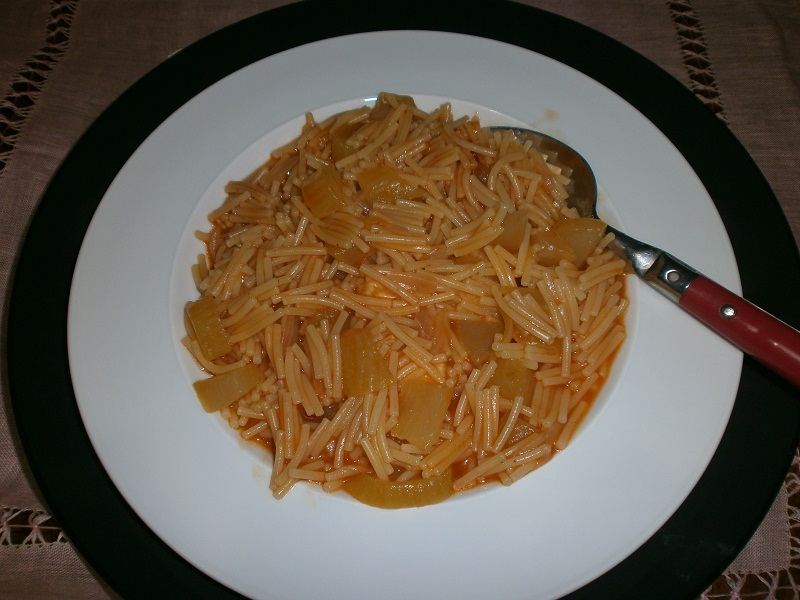
Pasta with squash, our summer & fall "minestra"

0 comments

Do you know how to cook "pasta con la zucchina a minestra"? I already told you about pasta a minestra in general, now we are preparing a specific minestra with squash. This is a great summer and autumn dish.

I know I know, everyone thinks that in summer you only have to eat cold or refreshing food, but Sicilian tradition do not agree with that. Infact in Summer we also prepare some types of pasta made with broth, like a soup, and this is exactly one of them. You may not have it too liquid (like it is in the pic above, but that depends only on your personal taste!) Even better is having it in this season, when the first rains arrive.

Ingredients & preparation for 4 people:
1 half of a squash (if very long)
1 small onion
400 gr. broken spaghetti (Ital. spaghetti spezzati)

4-5 ts of tomato sauce
80 gr. matured caciocavallo cheese in small pieces
salt (or a bio stock-cube if preferred)
olive oil
a small piece of dried red pepper

1. You peel the squash (pic on the left), cut it in half and then in thin slices. 2. On a medium heat put a large pan with half the water. 3. As soon as the water boils put salt (or a bio stock-cube if preferred), onion and the squash in pieces. 4. After about 12-14 minutes put the pasta and the tomato sauce. For this dish we use the "spaghetti spezzati" type of pasta, which are simply broken spaghetti.
5. When the pasta is almost cooked (usually after 10-12 minutes) put the little pieces of caciocavallo cheese inside the soup, so that they have the time to melt a bit (matured caciocavallo is very hard).This local cheese is very salty and tasty, so is the perfect contrast with the delicate taste of the squash.

If you want to try this lovely pasta don't hesitate: it's simple, healthy and tasty. Perfect for vegeterians or even health food nut people :) Enjoy!

Tuesday, August 16, 2011

"Anelletti al forno", our scrumptious baked Sicilian pasta

0 comments
 
Do you know what "anelletti al forno" are? Here in Sicily we have a typical shape of pasta that is called "Sicilian anelletti" which means little rings. We normally use them when we want to prepare our traditional baked pasta! 
You may find this little timballo of pasta in bars and diners in Palermo that goes with the most classic Sicilian ragout made of minced meat, tomato sauce, onions and pieces of vegetables like carrots and peas.

As this recipe is usually very rich we normally eat it in winter, while for summer we have a different version, considered absolutely "lighter" :-)
It is made of tomato sauce, fried eggplants or aubergines and Sicilian primosale cheese.

My family and I love this version of baked anelletti a lot more than the one with meat and we also add another ingredient: thin slices of Napoli salami, while other people prefer to add ham. 

This preparation takes a while (about 3 hours plus baking time), but the result is a scrumptious mouthwatering baked pasta that we normally have for the most important summer festivity: August the 15th, which is called Ferragosto (mid August term) but it is also a Catholic festivity that celebrates the Assumption of Our Lady, the Virgin Mary.
Baked pasta is something you do in layers, so read and follow the recipe carefully.

Ingredients and preparation for about 6 people:

600 gr. anelletti
2 aubergines or eggplants
200 gr. Napoli salami
250 gr. Sicilian primosale cheese
100 gr. Grated Sicilian caciocavallo cheese
1 bottle tomato sauce (about 750 ml)

breadcrumb
olive oil

1. First turn on the heat and put on a big pot for cooking the pasta. In the meantime 2. cut the eggplants in slices, not too thin, place them on a colander with salt on and leave them aside for about 15 minutes. It will make them release the bitterness and taste sweeter. After the time has passed just wash them under running water and they are ready to be fried in olive oil.

3. By the time you have finished frying, water in the pot will be boiling, so cook the anelletti as normal pasta, putting some salt in the water. They need about 20 minutes of cooking. 4. Stir the anelletti from time to time and prepare the tomato sauce in an appropriate sauce pan. 5. Cut the primosale cheese in slices or thin pieces and also the salami (you can either leave it in slices or cut it into pieces as well).


6. When the pasta is cooked (but careful not to overcooked it because it has to go in the oven as well!), drain it and add the tomato sauce plus the grated caciocavallo cheese.

Now it's time to start building the layers:
7. Take a large oven dish or tray with high rims and cover the space with some olive oil first, and breadcrumbs after, then put half the amount of anelletti mixed with tomato sauce and grated caciocavallo cheese on the bottom of the tin, then cover with a layer of fried eggplants, then primosale cheese and finally the third one with salami, just as shown in the picture below.


8. Put the rest of anelletti on top and finally cover with some more spoons of tomato sauce to avoid the pasta becoming too dry in the oven, then a drizzle of olive oil and a bit of breadcrumbs again to make the crust in the oven.
9. Bake for about 35 minutes or a little more, until it is golden and crusty.
10. Serve hot! On the right the final picture of how the whole thing should look before the baking phase. This is one of the best first dishes of all times... enjoy it!!!

Saturday, June 25, 2011

"Pasta alla Norma", what's the story of this incredible dish?

0 comments

Do you know how to make pasta alla Norma? And what is the story of this Sicilian dish? The pasta alla Norma is originally from Catania, the second bigger city in Sicily and is dedicated, just as the name suggests, at the famous opera lirica LA NORMA composed in 1831 by Vincenzo Bellini, a musician from Catania.

I have actually heard two different stories about this dish: the first one says that the name of the dish was given by a playwright Nino Martoglio, also from Catania. He was comparing the goodness of the pasta with the opera lirica and exclaimed: This is a Norma! (meaning as goos as the Norma...)

Second story is that while writing this masterpiece Vincenzo Bellini used to go to a restaurant and ordered always this dish of pasta, so the owner finally name it after his opera to homage Bellini. Besides, it is said that at those times the dish had a very special presentation: it was like a mountain-shaped plate of pasta with eggplants/aubergine at the bottom, all cut in pieces or slices and then on top the tomato sauce with grated salted ricotta covering everything. It was a very creative representation of the Mount Etna with its land, lava and snow.


Making the Norma is very easy if you have the right ingredients. For 6 people you will need:

600 gr maccheroni or spaghetti
500 ml tomato sauce
olive oil
grated salted ricotta
basil
salt
aromas (cinnamon, nutmeg)
2 eggplants or aubergines

Preparation:
In Sicily we have two varieties of eggplants or aubergines: the oval ones and the rounded ones. These last ones (the pic on the right) are the best and the most used in the kitchen because of their sweeter delicate taste. We call them "tunisine" which means Tunisian, allegedly because they used to come from there.
1. When we use eggplants/aubergine we cut them in slices or dices, depending on the dish we are gonna make and then we place them on a colander with abundant salt and leave it aside for about 15 minutes. My mother taught me since I was a kid that this is good for giving eggplants/aubergines a sweeter taste and letting release the bitter they contain. After that you just have to wash them under running water and they are ready to be cooked.

2. Second step is frying. In a pan put some olive oil and start frying your eggplants until they become slightly brown on both sides (not black!). For this dish you can either do slices or cubes, it doesn't really matter!

3. Prepare pasta as you normally do, boiling it in salted water. While pasta is cooking put some tomato sauce in a sauce pan with some fresh basil and adjust with salt, sugar, cinnamon and nutmeg to make it more parfumed.

4. As soon as pasta is drained cover it with the tomato sauce and the eggplants/aubergines and grate on top the salted ricotta or instead, if you don't have it, some parmisan cheese. It will still be delicious and you will just ask for more.

*In some families they also like to add some mozzarella cheese in cubes before serving the pasta. They mix all the ingredients together in the pan and then serve with the mozzarella still thready. It is just an addition to the original recipe, but I swear they are both unforgettable and suitable for vegeterians. Enjoy!

Thanks to my friend Giuseppe for sending me the picture of his lovely pasta alla Norma!

Monday, April 11, 2011

"Pasta a minestra" and "Pasta asciutta": what are they?

0 comments
Do you know what is pasta a minestra? And what about pasta asciutta? As you know, in Sicily, just like in the whole of Italy, we eat pasta every day and for us is a great deal.

We normally distinguish in these two main differences: pasta a minestra and pasta asciutta. 
Pasta a minestra means 
soup or potage with also small pasta cooked in it, the specific one that we use for soups. In any case it is something that has a more liquid aspect rather than the usual plates of spaghetti or penne. In the picture on the left there is a plate of pasta a minestra with green cabbage, and we also have the version with pasta asciutta.


By contrast, pasta asciutta is the very famous one, like spaghetti alla carbonara for example, or penne, linguine, anelletti or any other kind of pasta that we cook with a condiment that is not liquid!!! Here on the right a plate of pasta asciutta with broccoli, but we also have the version with pasta a minestra.
Besides, we have soup with pasta all year around, not only in winter but also in summer with the fresh vegetables that the seasons offer.

I know it may sounds strange for those who are not used to eat pasta everyday or have it with soup as well, but that's the way it is here!!!
 
ban nha mat pho ha noi bán nhà mặt phố hà nội