Showing posts with label sicilian food. Show all posts

Saturday, December 14, 2013

Santa Lucia's Sicilian tradition in London? Yes we can!!!

0 comments
The traditional cuccìa, Palermo typical dessert on December 13th.

I am very happy to share with you the success of my first Sicilian dinner in London on the occasion of the festivity of St. Lucy or Santa Lucia as we call her, last friday December the 13th. Do you know why the festivity of Santa Lucia is such a big deal in Palermo city?

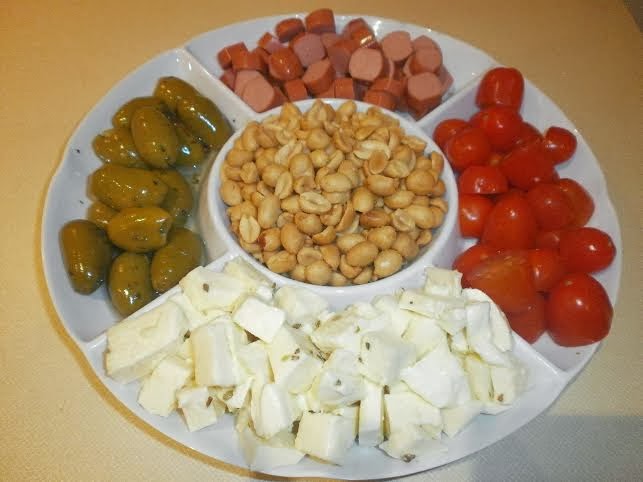
Mediterranean starter


   Our tradition imposes to avoid everything made of wheat like pasta, bread or biscuits, except the "cuccìa", a typical dessert made of boiled wheat in grains and mixed with ricotta cream, the classic filling for cannoli and cassata. For this reason real queens of the day are rice (particularly arancine), potatoe pies and panelle.


   With some lovely guests from Uk, Australia and, of course Italy, we had shared our tradition and remembered the story of this incredible Sicilian Saint especially how she saved the people from Palermo from the famine, back in 1646.

Thanks to everybody for the fantastic night spent together and of course... W Santa Lucia! :-p

Sunday, November 24, 2013

Sicilian food: for some people is "bizarre"

0 comments
Yesterday I came across this amazing video about Sicilian cuisine. Protagonist is Andrew Zimmern, an American chef visiting Sicily and looking for "Bizarre food", which is actually the name of his tv show. This episode is set in our beautiful island, from Palermo to the deep south, I thought it was a great idea to share it with you. I hope you like it!!!


Thanks to Eternallyprofound for having uploaded this video on youtube.

Thursday, November 14, 2013

A creative Sicilian delivers the entire 'pizzeria' at your home!

0 comments

Yesterday I read a very funny (not to mention amazing) story on a website called Palermoviva. A creative Sicilian pizzaiolo living in the province of Palermo this past summer started delivering pizza with its "ape".
Which is the piece of news? You could ask. Well... this guy does brings you pizza but also brings you an entire mini pizzeria outside your home, where he actually prepares and cooks your pizza on the spot. Isn't he a genius?

The people who have tasted it say the pizza is very good!

I like what the article says: "People think that us southerners are all lazy, but when you have to face an economic crisis, you start being really creative about the type of jobs you can do".

So the message is that you can fight the crisis with your own initiative! Enjoy!

Pics and article come from http://www.palermoviva.it/apepizza-a-domicilio.

Friday, November 1, 2013

Colorful Sicilian Marzipan Fruits: history and origin

0 comments
Photo Credit: terrenormanne.it
The so called "frutta di Martorana" (Martorana's fruits), also known as "pasta reale" (royal pastry) or "marzapane" (marzipan), are typical Sicilian almond sweets that we prepare and eat only in the period before and soon after the day of November the 1s and the 2nd, which are dedicated in our Christian tradition respectively to All Saints and to the commemoration of the Deads.

Photo Credit: partecipiamo.it
 Main ingredient of these sweets is the "pasta di mandorle", almond pastry, which took its name Martorana after the aristocratic woman Eloisa Martorana, who made build a Benedicte Monastery near the church of S. Maria dell'Ammiraglio at the end of the XII century. This church is infact also known as Martorana. 

Nuns to celebrate the festivity of All Saints used to prepare these almond sweets that reproduce forms and colors of many fruits and vegetables such as cauliflower, tomatoes, carrotts, chestnuts, peaches, apricots, mandarines, figs, apples, pears and a lot more.


Regarding the names, it was also called "pasta reale" because was particularly appreciated at the table of the King of Sicily Ruggero II, while the term "marzapane" has Arab origins: marzaban was a measurement used to indicate the capacity of a wooden box, where usually were sent almond sweets coming from Armenia or Cyprus.

Afterwards with the same pastry they also started to make sheep for Easter, to remember the sacrifice of the Lamb.

Thursday, October 24, 2013

Harim Network: food experience in Jordan with Andrea Alì

0 comments

Mediterannean food is conquering the world! It has already started with a great 4 days cooking course held in Ammam, Jordan, with the Italian Chef Andrea Alì, that will end today.


Organized by Euro-Mediterranean Academy and the society La Panthera establishment, the famous chef Andrea Ali has been a guest at JAU Jordanian University, College of Hospitality and Tourism Education. In Jordan, he has brought his specialties and the most famous Italian recipes, revisited by his personal culinary genius, such as pasta alla Norma, meatballs, tiramisù and the famous ARANCINE!

His cooking is simple and authentic; it is the expression of a tradition that enobles the raw materials of the land, particularly of the Iblei Mountains, on which it is located his prestigious restaurant: “Andrea Sapori Montani”, in Palazzolo Acreide (SR). Inside, local and seasonal ingredients, strictly zero km, which comply with the principles of Slow Food to which he adapts his "cooking philosophy."

The course of Italian Cuisine in Amman will end with a competition among aspiring chef participants who will award the winners with a trip in Italy to visit and live the experience of Italian cuisine in Andrea’s Alì restaurant.

Thanks to this new international project signed by Harim Network, we hope new collaborations will start and the new generation of chefs made in Jordan will discover the Italian culinary heritage.

Sunday, October 20, 2013

Cauliflower fritters, another way to eat caulflower!

0 comments

Do you know how to prepare some delicious cauliflower fritters?
This dish is great to make children eat this vegetable, as they don't usually like its strong
funny smell. But, if you prepare some fritters like these ones, crunchy outside and soft and tasty inside, I am sure they will love them!!!

Ingredients & preparation for 4 people:
a small cauliflower
1-2 eggs
breadcrumb
grated caciocavallo cheese
salt & black pepper
a pinch of nutmeg or turmeric (optional)
e.v. olive oil


It's always difficult in recipes like this, specify the exact quantity for the ingredients. I usually wash the cauliflower and boil it first in salted water. As soon as it is cooked let it drain on a colander so that it gets rid of all the water that contains. Then, in a bowl place our vegetable and mix it with an egg and 3 table spoons of breadcrumb and 3 of grated cheese (if you don't have caciocavallo choose another you like). 

If the mixture is still too soft add more breadcrumb and cheese, if it's too hard add a second egg. A pinch of black pepper to finish with, and nutmeg or turmeric if you like it too. That's it... we are ready to fry!

On a large pan, pour some e.v. olive oil on a high heat, when the oil is hot take a spoon full of the mixture and with the help of a fork or a second spoon slowly place it on the pan. Do the same for the rest of the mix until the pan is full.

Careful because they cook quite quickly. Once they are ready on one side (few minutes) turn them on the other side and when they are golden brown take them out of the pan and place them on kitchen paper for a little while to absorb the exceeding oil, then on a serving plate. They must be served and eaten while still hot!

This is a lovely side-dish that will turn a boring veg in such an excitig recipe! :P

Enjoy!


Tuesday, October 1, 2013

Sicilian experts: An interview with Chef Giuseppe Di Cristina

0 comments

We always talk about Sicilian food and recipes but today I am particularly glad to post this interview to a young Sicilian Chef who, because of his profession, is entitled to speak about this topic more than me: Giuseppe Di Cristina. (Qui la versione in Italiano). 

Me: Hi chef, let's start with a brief introduction about your work and background.
Chef: First of all thanks for this interview. I am honoured to answer your questions. I started to work at 14 years old at the restaurant Villa Flora (Palermo) while I was attending the 1st year of Catering school. From there I moved to several places trying to learn like a sponge the different types of catering and food service, both in Sicily (Mondello, Cinisi, Caltagirone, Campofelice di Roccella, Marsala and Palermo again) and in other parts of Italy (Pavia, Borgomanero (No), Courmayeur (Ao).
At 25 I became sous-chef working at La Nave and after 5 years I realised I was ready for the big jump: be in charge of a kitchen on my own!
So in 2010 I started this new experience at the restaurant Torre Battilamano in Termini Imerese (Pa), then on the Alps in Cervinia (Ao) and back to Sicily at the Four Seasons in Lascari near Cefalù. Only recently I decided to become a freelance, working on my own, organising courses and teaching in professional schools.


When did you realise you wanted to become a professional Chef?
When I was a kid, smelling the parfumes coming from the kitchen when my mum and grandma were cooking.

Which is your favourite Sicilian dish and why
Being not only a chef, but also a scuba diver, I would say by all means the swordfish rolls, with red orange, raisins and pine nuts. I have always thought that this recipe is the great union between sea and land, which expresses the deep bond of Sicilians with the two resources of our island.

In your experience how do other people perceive our cuisine? Which is the most requested dish?
Sicilian cuisine is very well appreciated. There are no other regions that can boast our triumph of colors, parfums, smells and flavors in every single month of the year. The dishes that people ask the most, especially from my experience working in the Alps near the French border are two: the Sicilian Cassata and the Caponata.

What inspires you when you decide to create a new recipe?
Great question! Actually it depends on the occasion. I usually focus on the topic: if the dish is for a restaurant or for a particular party, or for a contest for example. In any case I decide the main ingredient and I start to examine in my mind every possible technique of cooking it and also if matches with other ingredients. 

From there I try and experiment with different colors and parfumes. Palate and brain become like lovers just like when a painter starts creating on his canvas. I have to say that 8 times out of 10 the final result is exactly like I had imagined it. Recently what inspires me the most is the woman of my life that is like a real Muse to me. Nowadays, when I create a dish, I do it thinking about her.

Can you name two Sicilian Chefs you appreciate? A senior and a junior one?
The senior is Pino Cuttaia, the most talented I have ever known, especially because has humility, a virtue which you don't see often. The junior that I appreciate is Roberto Pennino. He is one of the 'Maestri Pasticceri' of the entire island and is not even 30 yet. He is also great at carving vegetables. 

Meat or fish? Fruits or desserts? White or red wine?
Sea is definetely my element so I have to say FISH! I love desserts, especially soft creamy ones, while for the wine I prefer the red one.

Which is your favorite street food?
Panelle of course!!! In Palermo they are loved by kids and grown ups of every age. Plus... that lovely soft bread we eat them with... just amazing.


What do you think about the big success of culinary tv shows or reality?
I think they could be created better. Our category has obviously gained a lot of visibility, but in some cases there are people who talk about cooking without having a proper knowledge or understanding of it. 

If you would like to celebrate an event and not cooking, where would you go?
In the province of Palermo I would go to three places: Il Ghiottone Raffinato, il Cafè 113 in Casteldaccia and Il Normanno in Cefalù.
Which is the worse stereotype about Sicilian Cuisine?
That we don't have a tradition of meat dishes. This is totally wrong. In ancient times the tables of aristocrats were always full of game like rabbits, hares, wild boars, quails, partridges, ecc... not bad for an island, eh?!
Is there a foreign cuisine you particualrly appreciate and why?
Yes, it's the Austrian one, for its magnificence especially in Patisserie.  

Which is your next project?
In October I will start again with the cookery courses at DiCristina’s, my company. I love sharing my knowledge with people that are not professionals but have passion for food and cooking. 

GREAT! Thanks a lot for your time and answers, Chef! :-)
Please let me thank you for having contacted me and given me the honour of this interview on your blog. Thank you so much. 

Chef Giuseppe Di Cristina


Sunday, September 8, 2013

Breaded eggplants or as we call them: "cotolette di melanzane!"

0 comments
Cotolette di melanzane
Do you know how to prepare some amazing breaded aubergines or eggplants?
This is a Sicilian recipe that we called "melanzane a cotoletta". Melanzane means aubergine/eggplant, while the expression a cotoletta explains the way we cook it, as I wrote in my previous article. My friend Lucia and I prepared them last week.

Ingredients & preparation for 4 people: 
- 1 rounded aubergine/eggplant (the ones we call tunisine)
- 2 beaten eggs
- breadcrumb
- olive oil
In Sicily we mostly use these kind of eggplants because they are sweeter and absorb less oil during the frying process.
1. As the pictures explain first let's cut the eggplant in slices not too thin. Place them in a colander with salt on for about 15 minutes than wash them under running water and dry them with a clean cloth;


 2. Prepare the "eggplants cotolette" just like in the video shown here (beaten eggs and breadcrumb);

3. Put on a high heat a large pan and fill half of it with olive oil and fry them on both sides until golden brown (pic below). 

4. Prepare a plate with kitchen paper to help absorb the exceeding oil, then serve them warm with a refreshing salads like tomatoes or rockets. 

When we were kids and my mum was preparing any kind of cotoletta, there was usually some beaten egg left, so she used to add some more breadcrumb and fry it at the end like a thick omelette. We loved it and we always fought to get the biggest piece of it!!!

Try them at least once, they are delicious and you will have a scrumptious lunch that is definetely worth the time spent frying!

Sunday, September 1, 2013

The basics of Sicilian Cuisine: the "cotoletta" preparation!

0 comments
Hi dear food lovers and blog readers, last week I asked on my facebook page the best way to translate our word "cotoletta" and I had some interesting answers, thanks very much!

Infact I was with Lucia, a friend of mine and I was helping her in preparing some amazing eggplants in breadcrumb, so I thought to write a few lines about this preparation that we love so much!
Be careful though because here in Sicily we have 2 similar ways of preparing breaded dishes: a lighter one (usually referred as impanatura) and a more complex one (the real cotoletta).
 
1) Light- We call it "impanatura" (literally means breaded) and is usually used only for meat or fish, we run it only in breadcrumb or sometimes in olive oil first and then breadcrumb (like this we do veal, chicken breast or swordfish);
2) Complex - We run both meat or vegetables first in beaten eggs and then in breadcrumb. Then we fry whatever is that we are preparing. So, the distinction is very important and is based on the ingredient you are preparing!!!

In this video that I shot, my friend Lucia and I were preparing some eggplants in breadcrumb (the recipe is coming soon on my blog) so I thought it was the best way to explain how we prepare any food "a cotoletta". Enjoy!!!

Saturday, August 10, 2013

"Do you want pane e panelle?" My first interview to an Italian newspaper

0 comments

Hi dear readers and food lovers, as I had happily announced few days ago on my Official Facebook page, I have been interviewed a second time this summer for my blog. How exciting!!!
It was an Italian newspaper always interested in finding Sicilian bloggers to talk about. So here it is a recap of my interview translated just for you :-)

What does your blog talk about?
The blog combines three passions of mine: food, writing and English language. So it talks about recipes but not only. I have written about Gaetano Basile's new book about food, about the Sicilian chef Natale Giunta fighting against organised crime and about one of the favorite place of judge Paolo Borsellino: the Focacceria San Francesco in Palermo. Obviously common denominator are always Sicily and food.

Why are you writing in English?
Many reasons. I wanted to export Sicilian cuisine, connect with all the numerous Sicilians that live abroad and miss the colors and parfumes of our wonderful cuisine, and let other people in the world know about our food and tradition as well.

It's a mortal sin leaving Sicily without trying...
A lot of stuff: panelle, pasta al forno, cous cous, grilled primosale cheese with black pepper, fresh ricotta cheese, brociolone, caponata, fried sardines.
Arancine and the whole rotisserie, pistaches ice cream flavor from Bronte, gelo di mellone, marzipan (pecorelle or frutta di martorana) and everything coming from our patisserie, starting with cannoli and cassata.

Three blogs that you like.
Fashioncooking.it because I like the fact that combines fashion and food. L’ora del libro, an Italian blog for those who love reading and Cliomakeup which is all about beauty products and make up.

Three stereotypes about Sicilian cuisine.
The caponata is made only with aubergine/eggplants and not with bell peppers.
The parmigiana has fried aubergine/eggplants and has nothing to do with the city of Parma or Parmigiano Reggiano.
The ricotta cream for desserts is made with fresh ricotta, sugar and dark chocolate chips only. Some people think there are also pieces of candy fruits, it was an old use, but not anymore.

Which adjective would you use to describe the following things:
Bronte's pistaches: precious
Pane ca meusa/spleen sandwich: poor
Modica's chocolate: historical
Sfincione: with strong characte
Caponata: multi-cultural

Tastes and parfumes.
Palermo: pane e panelle and street food in general
Trapani: cous cous with fish and caldofreddo
Messina: pignolata bicolore, lemon and choc.
Siracusa: slushes
Catania: Nerello Mascalese
Ragusa: caciocavallo cheese

Sicilian Chefs. Who do you prefer?
On this matter I have to improve my knowledge, among those who I have appreciated the talent there are:
1. Angelo Treno
2. Giuseppe Di Cristina
3. Natale Giunta


Name, origins, job, what you read and what you watch on tv.
Georgia from Palermo. I am a freelance web content writer, I work with social media and communication. Basically I write, not only for work but for pleasure as well, infact few months ago I published my first novel in Italian entitled: “L’Equilibrista”.
I love Sergio Bambarèn's books, but also the ones that tell true stories. Recently I read two amazing books that every human being should read: Ruta Sepetys' “Between shades of gray” and Immaculè Ilibagiza's “Left to tell”. On tv I like watching movies that make me laugh and relax, and depending on what happens in Italy, I may also watch programs on current affairs.

Your favorite aphorism.
Carpe diem. It's from the latin poet Horace and means "seize the day". 

Recipe and wine for this summer.
For this torrid summer I would suggest the cous cous with vegs. It's healthy and fresh, and perfect for any occasion. It can go with both a white or a red wine.
I am not a sommelier but I will try a combination with either Corvo Glicine or Cerasuolo from Vittoria. Both rigorously Sicilians!!! 


You can read the original interview here.

Friday, August 2, 2013

Sicilian wines: from the pleasure to the healthy properties

0 comments
 
What do you know about Sicilian wine? Would you like to discover more? Eve Pierce has written a brilliant new piece for the Sicilian Cuisine Blog about our wines and their superb properties. So if you are a wine lover, or just a curious person, don't miss it! Here she is in her own words: 

"Sicilian wines are having a boom right now so it’s a good time to start sampling the wonderful range on offer not only for pleasure but also for health reasons. According to a new book by Robert V. Camuto the number of commercial wine producers in Sicily has grown from around 60 to nearly 300 since 1990. Palmento: A Sicilian Wine Odyssey (University of Nebraska Press, 2010) attributes the boom in boutique style quality wine production to the rediscovery and appreciation of the unique “terroirs” of Sicilian wine.

There are more vineyards and grapes grown in Sicily than in any other region in Italy. Sicilian vineyards have been producing wine since at least 750 BC. The island’s main wine production focused in recent history on their famous fortified Marsala and cheap blends of wine as a major export. Nowadays their wines are winning awards and turning heads across the world.

What’s making some of the Sicilian wines even more special is the impressive number of biodynamic and organic wines being produced. It is made easier by the amazing farming conditions on the island where around 300 days of plentiful sunshine beams on vineyards and the 90 plus day harvest is one of the longest in the world. Frank Cornelissen who ages his natural wines in clay amphorae on Mount Etna says that “Thanks to our climate, Sicily is ‘organic’ by definition”.


Most wine drinkers will be also pleased to hear that Sicilian wines in particular are providing positive health benefits. The effects of a Mediterranean diet with a little red wine thrown in are widely believed to be beneficial but researchers at the Institute of Clinical Medicine at the University of Palermo in Italy have found some interesting results when testing Sicilian red wines in particular. 
Some Sicilian reds had a positive effect on many risk factors of atherosclerosis, or hardening of the arteries. The University of Palermo has also been involved in a study into why cancer incidence rates in Sicily are 20 per cent lower than the rest of Italy and 33 per cent lower than the USA. The results of the study are found on an Italian cancer website and the significantly reduced cancer rates are being attributed to a substance found only in Sicilian wines called Picetannolo which is commonly used in cancer medicines and treatments. There is a school of thought that also insists washing your hair in wine will reduce hair loss, not to mention make your hair glossier. Red wine is supposed to be more effective than white wine. Whether Sicilian wines will make your hair thicker and shinier we will leave up to you to find out. In the meantime we suggest you taste some of the fabulous Sicilian wines before it potentially goes to waste in the bath.


There is a huge choice of Sicilian wines to choose from. By far the most well known red grape is Nero d’Avola offering flavours ranging from jammy to full and spicy, sometimes blended with the fruity raspberry sweet grape Frappato also lovely on its own. The pinot noir like Nerello mascalese is one of the most appealing reds produced in Etna and Carricante is leading the charge for the whites from the region with a robust flavour.

Whether you choose to sample Sicilian wines for pure and simple pleasure or you want to discover the health benefits for yourself, you certainly won’t be disappointed by the great range and unique local wines of this amazing region."


Thanks again to Eve for her very interesting post. If you want to check also the healthy properties of the Mediterranean Cuisine click
here.

Monday, July 1, 2013

The Sicilian Cuisine Blog and my first official interview for 'Italian reflections'

0 comments

Very proud and very grateful to Adrian Petersen for publishing the very first interview since my blog, Sicilian Cuisine, was born on January 2011.


When I first started it some people told me it wasn't going to be successful because of the "language barrier". "In English? Italians are not going to understand it!" - they used to tell me.

Well... today after 2 years and a half and after these little huge things that I have accomplished all by myself I have to say I was totally right and I am looking forward to having more and more to come !!!!!

THANK YOU :-)


Sunday, May 5, 2013

Embrace the Healthy Cuisine of Sicily on a Mediterranean Cruise

0 comments
 
Eve Pierce is our guest blogger for today. She has written this amazing piece, just for us, on the Mediterranean diet and its healthy properties, focusing on Sicilian Cuisine. So here she is in her own words:

"The Mediterranean diet has been recognised as one of the healthiest ways of eating,
both within Europe and beyond, as its consumption is linked with longevity and a reduced risk of heart disease. It is based on the traditional dietary practices of Southern Italy, Spain and Greece, which is rich in plant-based foods, fish and olive oil, with modest intakes of dairy produce and wine, and comparatively little meat. In many ways the diet of Sicily is true to what is considered to be a Mediterranean pattern of eating. One difference is that Sicilians eat more meat than other parts of Southern Italy. This reflects the preference for meat of the Normans and Germans who came here in the middle ages; however, the use of fish is abundant in dishes and still commonly eaten. Fish is just as rich in protein as meat, yet white fish such as sea bream and sea bass, as well as the likes of cuttlefish and sea urchin, are low in fat, whilst oily fish like tuna, swordfish, sardines and anchovies are rich in omega-3 fatty acids. 

These essential fatty acids have long been known to protect the heart and circulation, but they are now known to be important for brain function, so may help to keep our mood balanced and to ward off cognitive decline. Make the most of the opportunity to eat fish whilst cruising in the Mediterranean and visiting Sicily, sampling varieties that you wouldn’t usually at home.

Like other parts of the Mediterranean, pulses (peas, beans and lentils) feature heavily in dishes and Sicily is second only to Tuscany for using them so widely. Fava beans and chickpeas are particularly popular and the former are often spiced and served as a bar snack; it often takes a while for tourists to twig what they are actually eating when they sit down with their beer or glass of wine. Fava beans are also frequently used in soups and are the principal ingredient of a vegetable side dish known as frittedda. Pulses are a good source of plant protein and iron; they are also full of fibre, so not only are they filling, helping with weight control, but they can also help to lower cholesterol. Other vegetables also feature highly in Sicilian cooking and although native varieties such as broccoli, fennel and peppers are popular, those introduced by settlers such as artichokes, tomatoes and eggplants have also become prominent in dishes. When eating out in restaurants, tomatoes and broccoli are often found in pasta recipes, fennel will be served in salads or baked as a side dish, artichokes find their way into frittatas, eggplants will be stuffed with other ingredients and a range of vegetables are combined to make ratatouille.

All vegetables and fruits are rich in antioxidants; these help to control levels of damaging substances in the body called free radicals, which alter cells and lead to the development of heart disease and cancer. Onions and garlic which are used frequently as a flavouring in Sicilian cooking, contains allicin which is thought to confer many of their benefits towards heart, cancer prevention and supporting the immune system. 

As would be expected in the Mediterranean region, olive oil is the predominant oil used in Sicilian cooking and dressings. This oil is rich in monounsaturated fat, which is the type of fat most beneficial to cholesterol, as it lowers harmful LDL cholesterol whilst maintaining levels of protective HDL cholesterol. The nuts introduced from the Middle East – notably almonds, pistachios and pine nuts – contribute further beneficial fats to the diet. They are used to make pesto and in a range of sweet dishes, though are just as enjoyable as a snack with dried fruit such as apricots, figs and currants; pick up some nuts from a Sicilian market to enjoy when back on board.


A trip to Sicily wouldn’t be complete without sampling their wine; even if you just stop off for the day as part of a cruise itinerary, don’t pass up the opportunity to try it. The soil on the island is ideal for growing grapes and wine has been produced here since the Greeks came to Sicily. Try the Sicilian red wine on your holiday; good examples include Nero D’Avola, one of the oldest grape varieties offered by the island. A moderate intake of red wine a day appears to be protective towards the heart. Antioxidants found in red wine is thought to protect the blood vessels and reduce the risk of a blood clot developing.

However long you are in Mediterranean for, embrace its traditional cuisine and look out for those dishes particular to Sicily. Not only will your taste buds thank you, but so will your health, particularly if you can adopt some of their beneficial dietary practices when you return home. The island of Sicily features as a destination on numerous cruise itineraries, providing you the chance to step on to the island’s soil to see for yourself what culinary delights are on offer. Anyone looking to eat well on holiday, in terms of the taste, quality and healthfulness of their food, would find it difficult to fault what Sicily can provide. Here we look at the cuisine of Sicily and the highly nutritious traditional ingredients that are widely used in the island’s cooking, which you can enjoy on board and in Sicily’s restaurants."

Thanks a lot to Eve for this incredible and useful article.


Pic frittedda: http://c1295762.cdn.cloudfiles.rackspacecloud.com/cwright-fava2.JPG
Pic mackerel: http://it.123rf.com/photo_12679982_sgombri-freschi-di-pesce-scrombrus-scomber-su-ghiaccio.html

Monday, April 1, 2013

Reviews: A real Sicilian "arancina" in Notting Hill?

0 comments
Do you remember when I talked about the famous and extremely popular Sicilian rotisserie? You find it in bars and cafès and one of the most appreciated pieces is definetely the ARANCINA, the huge rice ball fried and filled with mozzarella cheese and ham (al burro) or with Sicilian ragù made of minced meat sauce (alla carne). Delicious! Especially in Palermo everyone is crazy about our amazing arancine and one thing you don't know for sure is that the noun is actually FEMININE in this part of the island! And it is a very big deal for us! So remember it when you visit Palermo and you want to try one, all right? :-)

Recently, while I was in London, walking in the renowned area of Notting Hill I happened to find a food spot called: "Arancina, the traditional Sicilian pizzeria". The name was curious to me, to start with, because in Sicily we have a lot of famous dishes, but the pizza is not something we export as Sicilians, while the arancina definetely is. We do have our tasty pizza called sfincione in Palermo, but to my surprise there was no trace of that in the pizzeria, so I gathered the owners could not be from Sicily and infact I was right.


The place was lovely, cosy and very nice decorated, the people kind and smiley, the location amazing and the pizza was really good, it reminded me about the traditional pizza a taglio they make in Rome: thin, soft and tasty. Obviously as a real Sicilian and a food blogger (perfect combination, isn't it?) I had to try the arancina and see if it was like the original ones, but sadly my reaction was disappointment. Big disappointment.

For two reasons: first the SIZE of them. 
These ones were tiny ones... I would say "supplì" (originally again from Rome) with a different name.
Second the PRICE. A small fried ball of rice for 2.60 pounds.

In Sicily an average arancina is sold between 1.20 and 2.00 euros at the maximum (which in pounds is between 1.00 and 1.80 and in dollars between 1.50 and 1.70 more or less) and it is DOUBLE in SIZE.


In my opinion if you want to sell something at a high price because is exotic or sough after it's ok, but at least sell it in the correct size. I would have preferred to spend 3.00 pounds for an original big sized arancina, rather than 2.60 for a tiny one.
The taste was ok, it wasn't the exactly one but was good, ...I was hungry and I ate it with pleasure, but to be honest it was gone in just three bites and that was it. That was my lunch.

Do you know which was one of the most important ingredient that was missing in there? SATISFACTION!

Having something that is scrumptious, very well made and leaves you full and happy? Plus, you eat it and think of your homeland,... missing it. It is something that has to do with food, but above all with memoirs, family, friends, tradition, connection. All in one arancina and it wasn't accomplished at all!


Simple as that.

So, I would recommed the place
(here is the website) for a nice authentic Italian pizza a taglio, but I would suggest to work more on the arancina... at least on the size, because if you sell the real thing customers will triple! And in case you want to try the original ones, there is only one place: Palermo, Sicily!

Then, we can talk about TRUE SATISFACTION!!!!!
 
ban nha mat pho ha noi bán nhà mặt phố hà nội